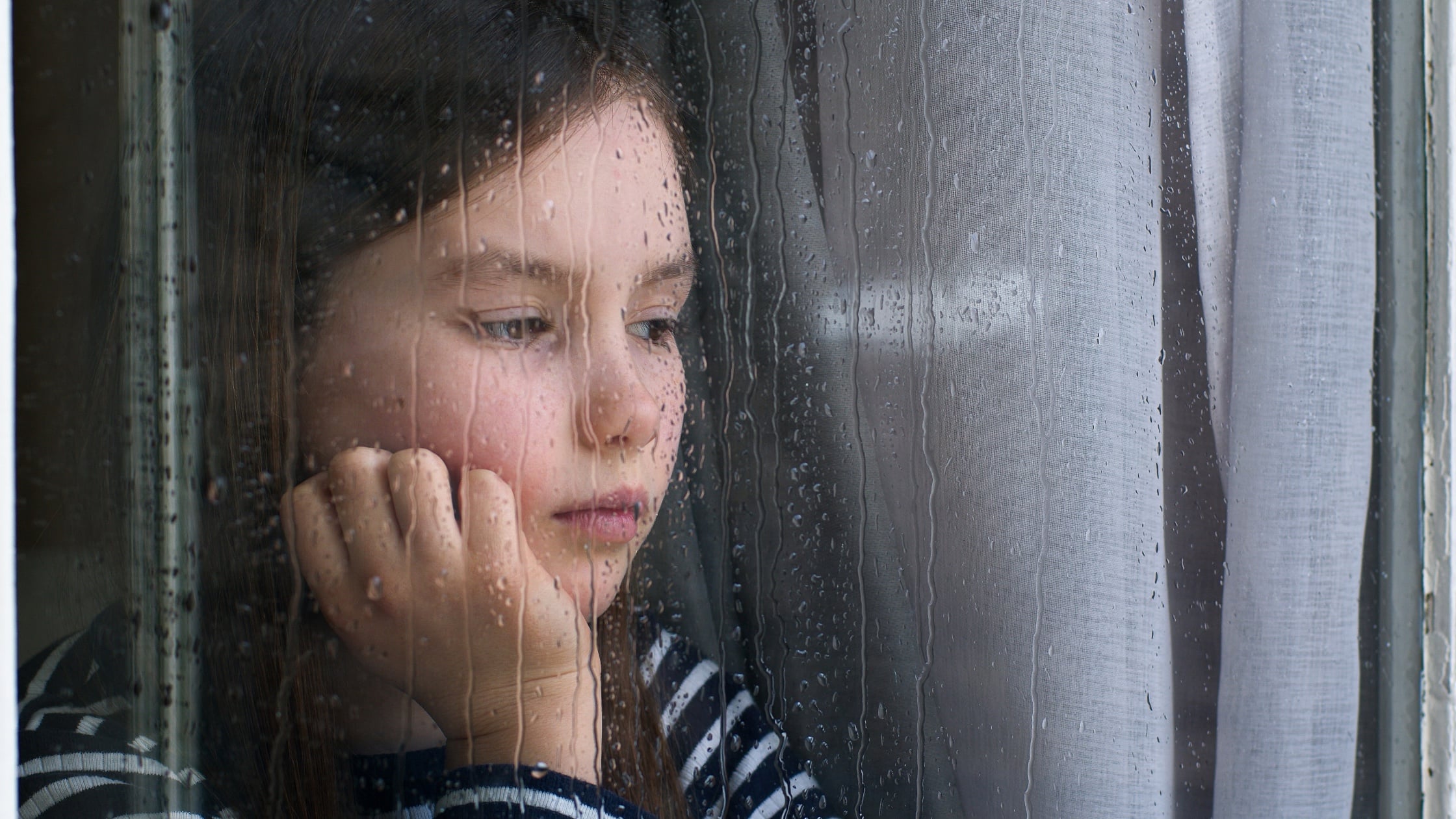
Your four-year-old has asked for the third time tonight whether Dad can see the same moon from where he is. Your nine-year-old, who seemed fine all week, just fell apart over a lost toy that is clearly not about the toy. At the same time, you are doing your best juggling dinner, homework, bath time, and cleaning up.
If a parent in your home is deployed or about to be, you are in one of the hardest stretches of military life. November is the Month of the Military Family, observed across the Department of Defense since 1993, and Veterans Day on November 11 is a good reminder that the people holding things together at home serve too. That includes your kids.
At Rainbow Pediatrics, we care for military families in and around Fayetteville every day. We understand the impact that deployment can have on children and adults. This guide draws on the American Academy of Pediatrics, Military OneSource, and the Center for the Study of Traumatic Stress at the Uniformed Services University. It covers what deployment can look like for children at different ages, what to say at home, and when to bring in your pediatrician.
What Deployment Looks Like to a Toddler, a School-Age Child, and a Teen
Children do not process a deployment the same way. A lot depends on how much they understand about time, risk, and why a parent has to leave. Here is what tends to show up at each stage.
Babies, toddlers, and preschoolers
Little ones don't understand why Mom or Dad isn't there at bedtime, and they have no real sense of how long “six months” is. Babies pick up on the mood of the house, so changes in feeding, sleep, or fussiness can show up even though no one has explained anything to them.
In toddlers and preschoolers, common stress reactions include:
- Regression. Bedwetting, baby talk, or asking for a bottle again.
- Clinginess. Fear of being left can turn a child who would usually run off to play at the park into one who would rather be cuddled.
- Fear. Many young children cannot put fear into words, so it often comes out in behavior instead.
- Uncontrollable crying.
- Ongoing irritability. Defiance, tantrums, and a short fuse that does not let up.
- Changes in appetite and sleep.
Because small children cannot yet name what they feel, you can do it for them. If your child seems afraid, try saying, “It looks like you are feeling afraid.” Hearing the word gives the feeling a name, and watching you talk about feelings teaches them that it is safe to.
Another trick: skip the calendar months and tie the homecoming to something they know, like a birthday or a holiday.
School-age children
Kids in this range understand more, which means they worry more. A common fear is that the deployed parent will get hurt. Younger school-age kids do well with a calendar they can mark off themselves. By ages 9 to 12, children are more likely to follow the news, can understand a return date, and often love having a way to stay in touch, like pre-stamped envelopes or a private email address of their own.
Stress in this age group often shows up physically. Stomachaches and headaches are common, and so is regression, such as baby talk or bedwetting in a child who had outgrown it. It is also a very normal way for a worried child to ask for extra comfort.
Teenagers
Teens may be angry that their parent had to leave, and they are dealing with that on top of everything else that comes with being a teenager. Many take on new responsibilities at home, like watching younger siblings or helping with household chores and grocery shopping, which can feel like a lot to carry while a parent is away.
Moodiness, pulling back, and losing interest in things they used to love can all be part of the picture. Teens also tend to hide how they are doing, so a short, low-key check-in in the car often works better than a sit-down talk.
What to Say, and What to Leave Out
How you talk about a deployment matters as much as how often you talk about it. Military OneSource’s guidance for parents of young children comes down to a few habits.
Explain deployment simply.
For a small child, “Dad is going bye-bye for a long time for work” is enough. Show them on a map where he is going, so the faraway place becomes something they can point to.
Be open, and speak at their level.
Share what is true in words your child can follow. It is fine to say, “I miss her too.” Pair it with something to look forward to: “I am so excited that Mom is coming home for R&R in December,” or “I can’t wait to video call with Dad on Saturday.”
Give them a game plan.
Children feel safer when they know what happens next. Walk them through the week: “Grandma will cook on Tuesdays, you and I will go out for pizza on Thursdays, and our neighbor is going to help get you to school.”
Leave out the scary what-ifs.
Do not introduce the idea that something bad could happen to Mom or Dad while they are deployed. With school-age children and older, do not bring up safety worries yourself. If your child raises this topic, answer calmly and keep it short.
Send letters and pictures.
Children love getting letters. Small children love pictures even more, so include a photo or drawing along with a few simple sentences about what you ate or did that day.
Do not require video calls.
If your child struggles with video calls, don't make them take part. Instead, schedule a regular call between you and the deployed parent, and have your child in the room. They can say hi, and they don't have to do more if they don't want to.
Signs a Child Is Struggling More Than Expected
Some change in behavior during a deployment is expected. The AAP points to a few things that separate typical adjustment from something worth a closer look: extreme behavior, long-lasting symptoms, or symptoms that get worse over time.
The following are worth a conversation with your pediatrician:
- Worry about the deployed parent’s safety that your child cannot let go of, or extreme clinginess because of it
- Sleep, eating, or stomach and headache complaints that continue or worsen
- Uncontrollable crying, or irritability, defiance, and tantrums that do not settle down
- Strong reactions to small things, acting out, or new trouble at school
- In teens, pulling away from friends and activities, or risky behavior such as smoking, drinking, drug use, or sexual activity
- Stress that stays the same or grows after the deployed parent comes home
None of these is a diagnosis. They are signals that your child could use more support, and getting that support early is a good thing. You do not have to wait until a problem is big enough to feel “official.”
Routines That Help at Home
You cannot change the deployment. You can build a home that feels steady around it. These are the habits military family experts and the AAP return to most.
- Keep the daily rhythm familiar. Regular bedtimes, meals, school, and activities give kids something solid to lean on. Just resist the urge to fill every evening, since overscheduling adds stress instead of easing it.
- Keep a calendar. Putting X’s on a calendar lets kids see how much closer they are getting to their parent coming home.
- Ask what they have already heard. Start there, then explain things simply and at their level. Children often have more information, and more worry, than we realize.
- Manage your own big feelings first. Kids take their cues from you. It is fine for them to see you miss the other parent. They also need to see that you are steady and handling stress as calmly as possible, so rest and take time to recover.
- Pay attention. Watch for what your child may not be saying.
- Limit the news. Especially for small children ages 2 to 5, avoid news stories that show war scenes. Also avoid war and violent movies.
- Do not become lenient. Keep appropriate boundaries in place. They help kids feel safe and secure.
- Make staying connected part of the routine. Letters, emails, video calls (if your child is up for them), care packages, a map on the fridge showing where Mom or Dad is, and a recorded bedtime story can really help. Consider working on a shared family journal during deployment; it gives a child something to hand over at homecoming.
- Give your child a meaningful role. Doing well in school and helping at home can make a child feel like part of the team, as long as it does not turn into carrying adult worries.
- Accept help. A friend, fun family members, and a circle of support are critical. The calmer and more supportive you feel, the calmer your house is.
If you are struggling with the absence too, help is available. Military OneSource offers free, confidential support by phone at 800-342-9647, day or night, and Military and Family Life Counselors offer counseling built around the realities of military life.
How a Well Visit Fits In Before and After Deployment
A well visit is an easy thing to cross off before deployment stress starts, and it is just as useful once it is underway.
Before a deployment. A checkup is a good time to make sure vaccines and records are up to date, so nothing lands on one parent’s shoulders later. You can handle sports and school forms at the same time. It also gives your child a chance to ask a pediatrician questions in a calm, private setting, and gives us a baseline for how your child is doing.
During a deployment. If you are the only adult at home, you need a pediatric office that makes things easy. That is why we offer same-day sick visits, Saturday sick clinics, and online scheduling. If you have noticed changes in sleep, mood, eating, or behavior, please bring them up at any visit. We are glad to talk through what you are seeing and help you decide how to support them. Behavioral health is one of our services.
After a homecoming. Reunions are happy, and they are also an adjustment for kids and adults. Routines shift again, and children who held it together for months sometimes need to let it out. The AAP notes that if a child’s stress stays the same or increases after the deployed parent returns, individual or family counseling may help. A visit a few weeks after your family is back together is a natural time to check in.
How We Support Military Families
Rainbow Pediatrics was built for families like yours. We accept TRICARE and have five locations across Fayetteville, Hope Mills, Lumberton, and Raeford, so care stays close to home or the base. Our team includes Spanish-speaking staff for our bilingual families, and we treat every child like our own.
To everyone in a military family getting through this season, thank you. If your child needs a well visit before a deployment, support during one, or a check-in after a homecoming, we would be glad to see you. Book online anytime at rainbowpeds.net/schedule-appointment, or call your nearest location. We also invite you to read our PCS Guide for military families.

 6 min read
 Download
 Share