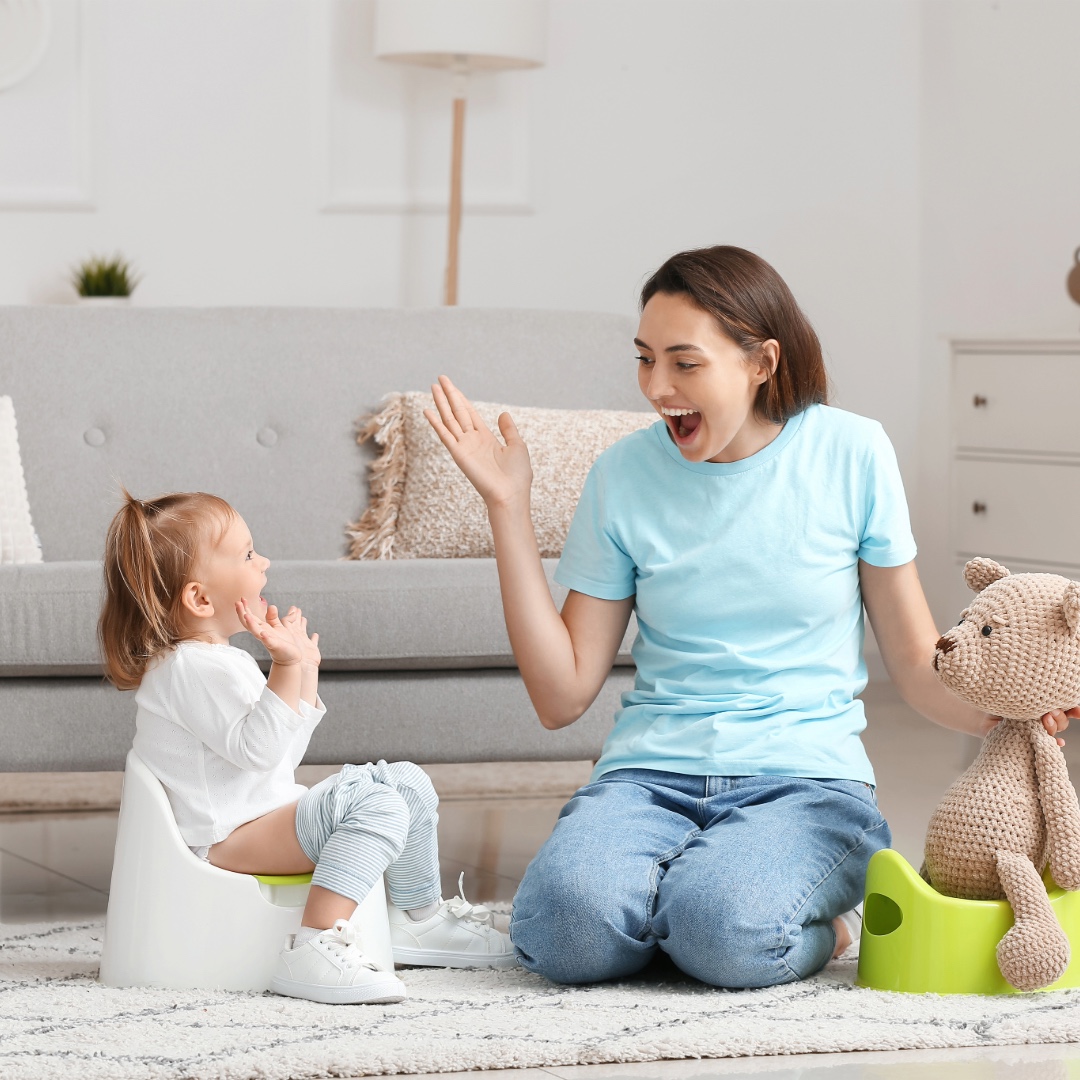
Learning how to use the toilet is a very exciting time for your child. But when is the “right” time, and how do you help them succeed at it? This month’s blog highlights the signs that your child may be ready for potty training and how to set them up for success. Let’s dive in.
Before Potty Training, Do This
According to the American Academy of Pediatrics (AAP), the best time to start potty training is when your child shows an interest in wearing “big boy” or “big girl” underpants or when they begin complaining about a soiled diaper and wanting to be changed. This usually happens around 18 to 21 months of age, but it may be later depending on the child.
At this point, they should be familiar with bathroom words like “poop,” “pee,” and “potty.” Openly talk about why they use the bathroom – it comes from what they eat and drink that the body cannot use. Try to avoid calling stool words like “stinky” or “dirty,” as they carry negative connotations. Keep things positive so your child is encouraged, not ashamed, to use the toilet when they need to go.
Initially, it is often easier for children to recognize they need to have a bowel movement than to recognize they need to urinate. Nonetheless, help your child recognize the signs that they need to use the potty. Watch out for hopping up and down, pacing, grunting, or crossing their legs. When you notice them doing any of these, ask them if they need to go potty. This will help them connect the feeling with the action. While still wearing diapers, ask them to tell you when they feel they need to go potty. Take note of how often they do this. As they become more in tune with their bodies, they inch their way closer to potty training time.
Help them understand the process by letting them observe you using the toilet. You can even say things like, “Ooh, I need to go pee (or poop),” and then head to the toilet with them shadowing you. After you are done, demonstrate how to wipe thoroughly and then wash your hands while singing the happy birthday song. Kids love to mimic, and this is a great way to teach them good habits.
The Signs They are Getting Ready for Potty Training
There is a definite method to the madness of potty training. According to the AAP, before you begin potty training, your child should be able to:
- Pull their pants up and down.
- Understand and respond to directions.
- Imitate others.
- Show independence and readiness to learn to use the potty.
- Come to you when they need their diaper changed.
- Can wait two hours or longer before urinating and passes stool three or fewer times per day.
- Knows what the potty chair is used for.
To help your child get excited about the transition, consider shopping for a potty chair together. This is a special rite of passage, and you want to help them feel proud for boldly moving into this new phase.
Once the potty is at home, place it in an area where they spend most of their time. This could be the living room. Show them how to use it while they’re still wearing their clothing. Let them become comfortable with getting on and off the potty and pretending to go. When they are doing all or most of these things, they may be ready for potty training, but before you start, ensure you are also ready to embark on this endeavor.
- Potty train when you have the time (and patience) to dedicate to it. Ideally, potty training should be done daily for around three months to build consistency.
- Allow your child to go diaperless during the day. When they show signs they need to go potty, act fast. Take them to the potty and allow them to try.
- Acknowledge recognizing the feeling of needing to go just as much as trying and actually going potty.
- Limit their time on the potty to five minutes. If your child is unsuccessful, keep at it. Have potty checks every couple of hours.
- For boys, have them start mastering urination while sitting on the potty first before tackling urinating while standing.
After a couple of weeks of successful potty training, begin using pull-on diapers. They are regular for underwear when they successfully urinate in the potty on their own for a full day. Again, this is another rite of passage, so take them to the store and let them choose the underwear they want to wear! Once they are wearing underwear, use pull-on diapers only when sleeping or on long trips away from home.
Staying Dry at Night
Children can usually sleep through the night without having an accident between the ages of five and seven. Expect accidents. Mattress covers and training pants will be lifesavers during this transition.
Be patient with them, celebrate their wins, and don’t admonish their accidents. We all had to learn, and patience and practice are the best ways to make this a positive experience for all.
We’re here to help support your child on this exciting journey. Reach out to their pediatric provider if they are older than 2 ½ years and still show no interest in potty training, are over 3 and aren’t yet using the potty successfully during the daytime, or are holding in their stool.

 3 min read
 Download
 Share
Share