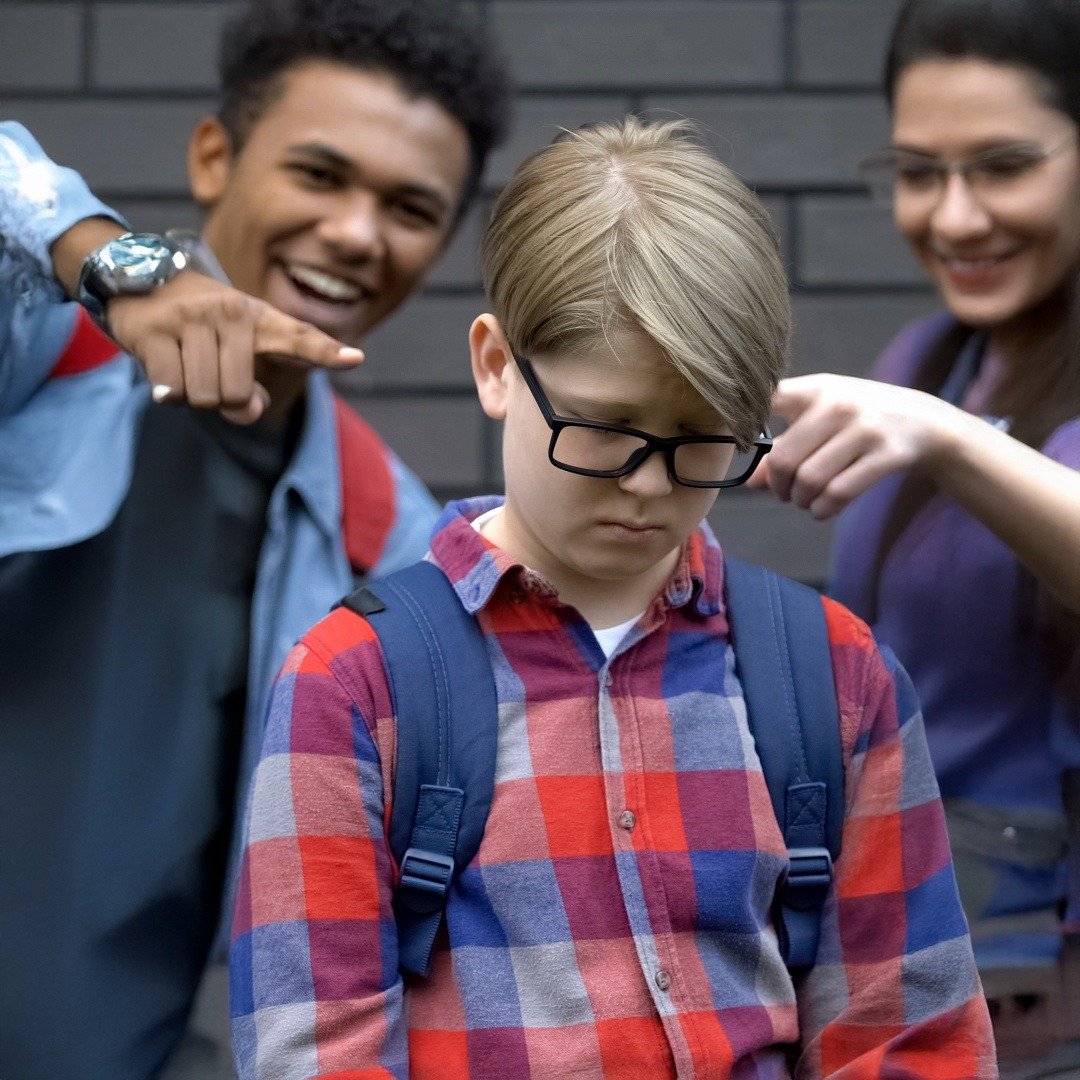
Imagine your child watching a friend get mocked on the playground. Their stomach clenches, they want to help, but their feet are glued to the ground. That terrifying feeling? That’s what they need to overcome.
Being bullied is not a rite of passage. The ramifications that can come from the trauma associated with being bullied are significant. Youth suicide is on the rise, with a staggering 1 in 5 high school students reporting they’ve considered suicide, according to the CDC.
Parents and caregivers can help their kids understand how to identify bullying and the importance of being an “upstander” from an early age. Here’s how.
First and foremost, kids must know how to identify bullying. Bullying happens when a person uses their power – whether physical, verbal, social, or online (cyberbullying) to harm another. This power is used to control and intimidate another person.
What is an “upstander?”
An upstander is the opposite of a bystander. Instead of just observing bullying and not doing anything, an upstander stands up to the bully and lets them know what they are doing is not okay.
To be an upstander, according to Stomp Out Bullying, when someone is mistreated, you:
Speak Up: Politely but firmly tell the bully to stop. Some examples of what to say include, “Leave them alone.” “That’s not cool, stop it.”
Support the victim: Let them know you’re there for them. Some examples of what to say include: “Are you okay? Do you want to walk with me?” “Let’s go talk to Ms. Baker.”
Bring in Backup: Tell a trusted adult, teacher, or authority figure. When teaching your child to Bring in Backup, explain they need to be specific, not just say ‘he was mean.’ They should report: 1. Who was involved? 2. What exactly happened (the actions/words used)? 3. Where and when did it happen? This gives the adult concrete information to act on.”
Be Inclusive: Invite someone who seems left out to join you for lunch, play kickball, or any other activity.
Type of Bullying
What It Looks Like
Upstander Response Focus
Verbal
Name-calling, teasing, insults, threats.
Speaking up directly (if safe).
Physical
Hitting, kicking, pushing, destroying property.
Immediate reporting to an adult.
Social/Relational
Spreading rumors, purposeful exclusion, and damaging reputation.
Being inclusive, offering support, and reporting the group dynamic.
Cyberbullying
Posting mean comments, sharing embarrassing photos/videos, hacking accounts.
Reporting and blocking (with adult help).
Being an upstander doesn’t always mean a dramatic confrontation. It often means a quiet, intentional act. If confronting the bully is too scary, the most heroic thing they can do is immediately find an adult.
In most cases, there is strength in numbers. Bullying is no exception. If children join together and say bullying is not acceptable, peer pressure will help shut down the behavior.
Parents: Model Upstanding to Your Kids
Kids learn by watching, and when they see you treating others respectfully and standing up for others in times of adversity, they will be encouraged to do the same. Don’t be afraid to share your own experiences with bullying. Talk openly about a time you were an upstander (or wish you had been) at work or back when you were in school—being relatable means being approachable.
When a child chooses to stand up for another, they aren’t just helping the victim; they are developing their character and learning leadership skills that will serve them well in life. Helping others takes courage and is an invaluable life lesson that will help them lead teams, manage conflicts, and be ethical citizens as adults.
A Critical Note to Parents: Don’t dismiss the trauma— it is easy to dismiss verbal bullying—the name-calling, the teasing—as “just kids being kids.” We might even think, “Well, they need to learn to have a thicker skin and deal with adversity.” But here’s the crucial point where we need to shift our thinking: The impact on the child is the only thing that matters.
While many kids can bounce back due to their “thicker skin,” others may have a harder time, which can increase their risk of depression and suicide. Don’t brush off teasing as a normal childhood rite of passage—evaluate every single instance on its own terms and get your child professional help (if needed) as soon as possible. Contact your child’s pediatric provider for guidance on how to handle any trauma that may be associated with their being bullied.
The goal isn’t to raise fearless children; it’s to raise courageous children who act even when they are scared. Have this conversation tonight. Practice the scripts. And remember: Every child has the potential to be a hero—they just need a little guidance to find their voice.
Getting care shouldn’t be complicated. Choose the time and location that work best for your family, and schedule your appointment in just a few clicks.

 3 min read
 Download
 Share
Share