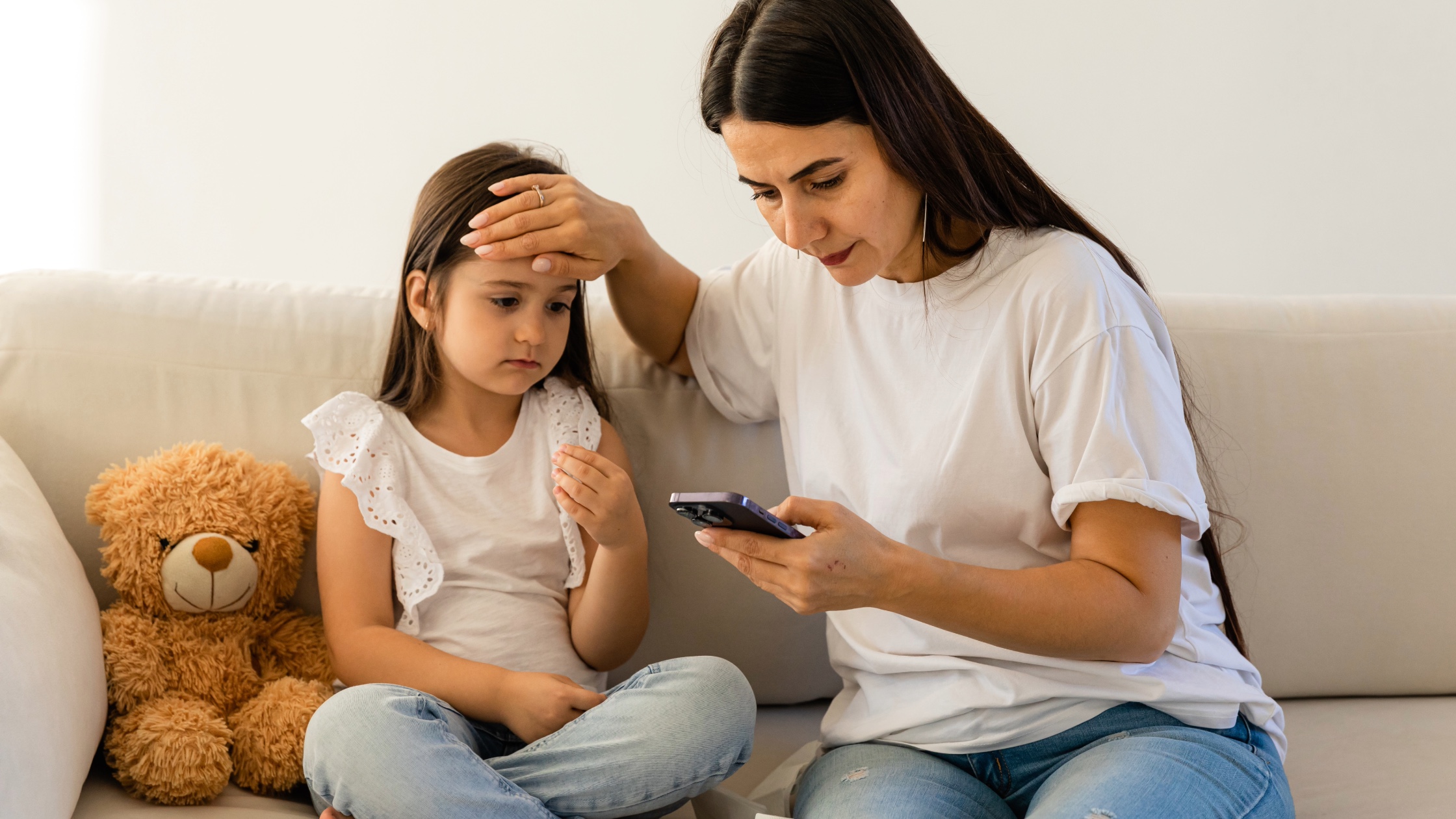
It is 7 a.m., and your child is complaining of a sore throat. You know the flu has been going around, and you hope it is just a cold, or even better, allergies. What do you do?
Every parent has scratched their head, wondering what they should do. You don't want to be the parent who sends a sick child to school. But you also don't want to keep a child home from school who could have gone. This month's blog aims to help demystify when a child should stay home.
The Clear Keep-Home-From-School Rules
Some things aren't a judgment call, and the American Academy of Pediatrics (AAP) makes the keep-home rules pretty clear. Here's what they recommend. Keep your child home if they:
- Have had a fever in the last 24 hours. The AAP recommends that any child with a fever of 101 degrees or higher should stay home from school, sports, or any other activity. Some schools draw the line at 100.4 degrees. Either way, most schools want kids to be fever-free for 24 hours without fever-reducing medications before returning to school.
- Have vomited or had diarrhea in the last 24 hours.
- Have a cough or cold with a fever, or a cough so persistent that they can't sit through class.
- Have an unexplained rash, especially with a fever.
- Have strep throat until they have been on antibiotics for a full 24 hours.
Where the Rules Become a Little Gray
We understand that not every illness is black and white. Sometimes your child has a runny nose and no fever, a mild cough, a headache that comes and goes, or a stomachache with no other symptoms. These are the scenarios that have most parents scratching their heads, but where intuition and knowing your child come in handy.
First, if they can eat, drink, focus, and get through recess, they can probably go. This is where your judgment is best. A clear runny nose alone isn't enough to keep a kid home. Nor is a mild cough without a fever. Allergies are rampant this time of year, and that could very well be the culprit of your child's complaints.
If your child is lying on the couch at 7 am, is not interested in eating, and gives you that look, you know the one that tells you in your gut that they are truly sick, keep them home.
Stomachaches happen. But a stomachache without a fever, no vomiting, and a test on the day's calendar is worth a conversation before it is worth a sick day. Anxiety can often be felt in the stomach. It could very well be that your child is anxious about the day ahead.
When to Call Your Pediatrician
The decision to keep your child home and calling the pediatrician are two different things. Call our office or use online scheduling if you see any of these:
- A fever that lasts more than two or three days, or any fever in a baby under three months
- Ear pain, especially with a fever or after a cold (babies and young children will often tug on their ears)
- A barking cough or noisy breathing, particularly at night
- Have pink eye with or without discharge, as the majority of cases are actually viral
- A sore throat with a fever and no cough, sometimes with a stomachache, which can point to strep
- Any trouble breathing, fast breathing, or working hard to breathe (in babies and toddlers, this can be RSV)
- Not drinking, or fewer wet diapers or trips to the bathroom than usual
- A headache after a hit to the head at sports practice or the playground (or the front yard)
- Any symptoms that were getting better and then worsened
You don't need to be sure of what's going on with your child before calling. That's why we are here. Our triage nurses will ask a few questions and tell you whether your child should come in today, tomorrow, or if you can monitor their symptoms at home.
When to Return to School After Being Sick
The rules are pretty clear: your child should be fever-free for 24 hours without fever-reducing medicine, have no vomiting or diarrhea for 24 hours, and be well enough to make it through the day. If your child was seen for strep throat or another infection that required antibiotics, they should be on them for 24 hours before returning.
Schools differ on when kids can return after an illness, so check your school's handbook or call and ask the school nurse. If you need a note for school, ask us during their visit, and we will send you home with one.
On Sickness This Time of the Year
And if you feel like your child is getting sick one illness after another, you are not alone. The first two months of school are when children are trading germs with their classmates. Handwashing before lunch, eating a balanced diet while minimizing sugars, and getting a good night's sleep will do wonders for your child's immune system. We covered more ways to keep kids healthy through the cold months here, and if your child hasn't had a flu shot yet, last month's blog walks through the timing.
We have five locations across Cumberland, Robeson, and Hoke counties and have bilingual staff at all locations. When you are scratching your head at 7:15 am wondering what to do, give us a call. You can also schedule a same-day appointment online or call the office closest to you:
- Fayetteville, Robeson St: (910) 486-5437
- Fayetteville, McPherson Church Rd: (910) 920-4428
- Hope Mills: (910) 426-5430
- Lumberton: (910) 778-1178
- Raeford: (910) 904-0404

 3 min read
 Download
 Share
Share